



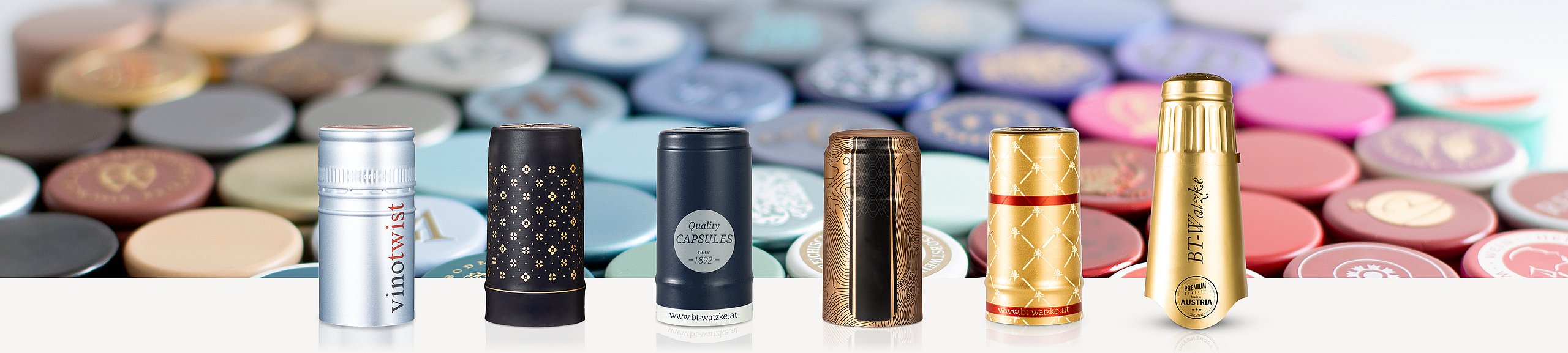
La elección óptima depende del tipo de vino y del tiempo de conservación deseado. Los tapones de rosca de aluminio, como el vinotwist BVS 30×60, son hoy en día la alternativa preferida al corcho natural:
- Sin sabor a corcho (libre de TCA): máxima garantía de calidad para viticultores y embotelladores
- Capacidad de almacenamiento controlable: mediante la elección de las arandelas de sellado (Saranex, Tin/Saran, entre otras) se puede regular de forma específica la entrada de oxígeno
- El BVS 30×60 (vinotwist®) es un tamaño estándar adecuado para botellas con boca conforme a la norma DIN EN 16293, compatible con todas las instalaciones de embotellado habituales
- Reciclable
En función del producto, la forma de la botella y el posicionamiento del producto, se utilizan diferentes soluciones:
- Tapón de rosca (vinotwist®) con junta de EPE: hermético, práctico, ideal para el embotellado a gran escala y el segmento de precio medio
- Corcho con cápsula de estaño: clásico y de alta calidad, estándar en bebidas espirituosas premium y de lujo (whisky, coñac, ginebra)
- Cápsulas de polilaminado: material compuesto de aluminio y PE con múltiples posibilidades de acabado, adecuado para botellas con tapón de corcho
- Cápsulas retráctiles de PET/PVC: económicas, de uso flexible, muy extendidas en el segmento básico y medio, y para proteger la apertura en tapones de corcho con formas especiales
La elección depende del segmento de precio, la forma de la botella y el posicionamiento de la marca. Los tapones de corcho con cápsula de estaño transmiten la señal de calidad más fuerte en el punto de venta.
En el caso de los vinos y bebidas con gas, como el cava, el prosecco o el vino espumoso, la estanqueidad a la presión es el criterio de selección fundamental. En el caso del tapón de rosca de aluminio vinotwist, se puede elegir entre dos arandelas de sellado resistentes a la presión:
- Saranex-High: sellado hermético fiable hasta 4 bar, probado para vinos espumosos y vinos ligeramente carbonatados
- Zinn-Saran High: máxima estanqueidad hasta 6 bar, ideal, por ejemplo, para el prosecco u otras bebidas con mayor contenido de CO₂
Para vinos y licores de alta calidad, la cápsula de estaño es la mejor opción: constituye el indicador de calidad más destacado en el punto de venta y refuerza el posicionamiento de la marca:
- Impresión de material de alta calidad: suave, maleable, con un tacto y un aspecto elegantes
- Diseño personalizado: estampable, imprimible, disponible en casi cualquier color (mate, brillante)
- Uso universal: para vino (tranquilo, espumoso) y licores (whisky, coñac, ginebra, grappa)
- Combinación con tapón de corcho con asa: solución clásica para licores premium
En principio, tanto los tapones de rosca como las cápsulas son aptos para el llenado automático:
- vinotwist® 30×60 – optimizado para líneas de llenado totalmente automáticas, alta compatibilidad con la maquinaria y control preciso del par de apriete
- Todas las cápsulas habituales (estaño, polilaminado, PET/PVC, aluminio) pueden procesarse con máquinas de capsulado automáticas
- Es importante utilizar el tamaño de cápsula adecuado y ajustar correctamente el cabezal de encapsulado, así como la temperatura y la duración de retractilado correctas, para garantizar un procesamiento fluido con un resultado óptimo de encapsulado o retractilado
Todos los productos cumplen las principales normas internacionales en materia de seguridad alimentaria, gestión de la calidad y gestión medioambiental:
- EN ISO 22000:2018 – Sistema de gestión de la seguridad alimentaria, base para el uso seguro de todos los cierres y cápsulas en contacto directo con los alimentos
- EN ISO 9001:2015 – Sistema de gestión de la calidad, que garantiza una alta calidad constante de los productos y la seguridad de los procesos
- EN ISO 14001:2015 – Sistema de gestión medioambiental, que acredita una producción sostenible y respetuosa con los recursos
Sí, los productos de BT-Watzke son aptos para el embotellado de vino ecológico y cumplen los requisitos esenciales de las bodegas que practican la agricultura ecológica:
- Arandelas de sellado sin PVC ni cloro: sin plastificantes problemáticos ni compuestos de cloro en contacto con los alimentos
- Reciclabilidad: los tapones de rosca y las cápsulas de aluminio son totalmente reciclables
- Producción sostenible: certificada según la norma EN ISO 14001:2015 (sistema de gestión medioambiental)
El control de calidad abarca todos los aspectos relevantes para el producto, desde la precisión dimensional hasta la seguridad alimentaria:
- Precisión dimensional y tolerancias: control preciso de todas las dimensiones para garantizar una procesabilidad óptima en la línea de envasado
- Pruebas de funcionamiento mecánico: comprobación del par de apriete y la resistencia del cierre en condiciones reales
- Inspección óptica y estética: control de la superficie, la impresión, el estampado y el color para garantizar una calidad de marca constante
Un almacenamiento adecuado garantiza la calidad del producto hasta su envasado:
- En un lugar seco, cerrado y libre de polvo: mantener el embalaje original cerrado hasta su uso
- Temperatura: 10–35 °C: evitar las heladas y las fuentes de calor directas
- Humedad relativa: 30–80 %: evitar la condensación y la corrosión
Solicitar la ficha técnica del producto: enlace de correo electrónico a office@bt-watzke.at
Identificar la causa del defecto:
- Tapón/cápsula: desviaciones dimensionales, defectos en las arandelas de sellado, daños durante el transporte
- Cabezal de taponado: control del par de apriete, comprobación del desgaste de la instalación
- Botella: geometría del cuello, desviaciones de tolerancia por parte del proveedor de vidrio
Documentar el fallo:
- No desechar las unidades afectadas: conservar la mercancía defectuosa o las muestras
- Documentar el lote, la fecha de llenado, los datos de la instalación y los detalles con fotografías
Sí, BT-Watzke permite personalizar los productos incluso en pequeñas cantidades. La cápsula es la tarjeta de visita de la botella y el primer punto de contacto con el consumidor; por eso, la variedad de diseños es muy amplia:
- Color y acabado: mate, brillante
- Impresión y estampado: logotipo, añada, variedad de colores, código QR
- Material y forma: estaño, polilaminado, aluminio, PET/PVC, papel-aluminio, a juego con la botella y el posicionamiento en el mercado
- Acabados especiales: perforaciones, tiras de apertura, granulados personalizados, textos o marcas UV
La vista también bebe: un diseño de cápsula bien pensado refuerza la identidad de marca y hace que el producto destaque en el lineal.
Para obtener una calidad óptima de impresión y estampado, se necesitan datos vectoriales:
- Formatos recomendados: AI (Adobe Illustrator), EPS, PDF (basado en vectores)
- ¿Por qué vectores? Los gráficos vectoriales son escalables sin pérdida de calidad, lo cual es imprescindible para el estampado y la impresión de alta precisión en cápsulas
- Los datos de píxeles/rasterizados (JPG, PNG) no son adecuados directamente o deben ser retocados
Recomendación: coordina los datos de impresión con el equipo de BT-Watzke con antelación; así se evitan las rondas de correcciones y los retrasos en el proceso de producción.
BT-Watzke ofrece una gama cada vez más amplia de soluciones de cápsulas y cierres respetuosas con el medio ambiente:
- Cápsulas de PET: ligeras y reciclables
- Cápsulas de aluminio: duraderas, totalmente reciclables y con un alto valor de material en el ciclo de reciclaje
- Tapones de rosca de aluminio (vinotwist®): reciclables en el ciclo de reciclaje
- Capsulas de papel y aluminio para cava: menor consumo de material, opción sostenible para el cava y los vinos espumosos
Sí, la reciclabilidad depende fundamentalmente del material:
- Aluminio (tapones de rosca, cápsulas de aluminio): totalmente reciclable, alto valor del material en el ciclo de reciclaje
- Estaño: reciclable, alto valor del material, dependiendo de las posibilidades locales
- Cápsulas de PET: reciclables, dependiendo de la recogida selectiva local
- Cápsulas de PVC: reciclabilidad limitada, eliminación según la normativa local
- Polilaminados: depende de las posibilidades locales
BT-Watzke produce según la norma EN ISO 14001:2015 y aplica activamente estrategias de producción y materiales sostenibles.
Más información sobre medio ambiente y sostenibilidad en BT-Watzke
BT-Watzke ofrece varias soluciones probadas en la práctica, especialmente diseñadas para pequeñas empresas, productores que comercializan directamente y pequeñas destilerías:
- vinotwist® Premium + taponadora manual: tapón de rosca profesional, de aplicación manual, sin necesidad de máquina taponadora
- Cápsulas retráctiles de PVC + aparato de retractilado manual: retractilado sencillo, económico y de uso flexible
- Equipos de alquiler: para empresas en Austria, BT-Watzke también pone a disposición máquinas de enrollado en régimen de alquiler previo acuerdo
Allí donde sea necesario demostrar la originalidad, la higiene y la seguridad del producto, las cápsulas retráctiles constituyen una solución económica y eficaz.
- Protección contra la manipulación (Tamper Evidence): daños visibles de inmediato en caso de apertura no autorizada
- Protección de la originalidad: garantía de que el producto no ha sido abierto para el comercio, la logística y el consumidor final
- Protección contra la contaminación: sellado fiable de envases, botellas y embalajes
- Ámbitos de aplicación flexibles: sector farmacéutico, cosmético, alimentario, químico y de productos industriales
• Más información sobre la seguridad de los productos y la protección de la originalidad
Sí, el equipo de BT-Watzke acompaña a viticultores, bodegas, embotelladores y fabricantes de bebidas espirituosas desde la primera consulta hasta la solución final:
- Asesoramiento sobre productos: selección de la cápsula óptima o del tapón adecuado en función de la forma de la botella, los requisitos de diseño y el volumen de embotellado
- Asesoramiento técnico: adaptación a la línea de embotellado, selección de arandelas de sellado, puntos de marcado
- Asesoramiento en diseño: personalización, datos de impresión, acabado de superficies
- Servicio de muestras: envío de muestras antes del pedido en serie, previa solicitud
BT-Watzke suministra a clientes de todo el mundo de forma flexible, directa y a través de una red de distribución internacional:
- Distribuidores en todo el mundo: personas de contacto locales en su región
- Servicio comercial en Austria: asesoramiento y atención personalizados in situ
- Pedidos directos a BT-Watzke, planta de producción en Pinggau (Austria)
Envío y logística:
- Camiones: cargas completas y grupaje
- Transporte marítimo: FCL (contenedores completos) y LCL (contenedores de grupaje)
- Servicios de paquetería y urgente: para cantidades pequeñas y necesidades urgentes
- EXW (Ex Works): recogida directamente en la planta de producción de Pinggau
Una tapa de aluminio es un elemento decorativo y protector de alta calidad fabricado en aluminio que se coloca en el cuello de las botellas de vino o licores para proteger el corcho y el cuello de la botella, al tiempo que realza visualmente la botella y su contenido con el fin de impulsar las ventas.
- Fijación: se fija firmemente al cuello de la botella mediante un proceso de engarzado
- Función protectora: protege el corcho del polvo, la luz y los daños
- Garantía de autenticidad: protección visible contra la manipulación para comerciantes y consumidores
- Aspecto y tacto de alta calidad: material flexible y moldeable con un aspecto elegante
- Fabricación sin costuras y personalizable
- Cantidad mínima: 2.500 unidades por modelo
- Pequeñas cantidades y proyectos especiales: se evalúan de forma individual; no dude en ponerse en contacto con nosotros
Si se trata de pequeñas bodegas, primeras ediciones o embotellados especiales (por ejemplo, ediciones de aniversario, tiradas limitadas, marcas blancas), póngase en contacto con nosotros directamente: juntos encontraremos la solución que mejor se adapte a sus necesida
El procesamiento de cápsulas de aluminio se puede automatizar por completo e integrar en líneas de embotellado:
- Alimentación: las cápsulas se introducen en barras en el cargador de la línea de embotellado
- Separación: separación automática y alimentación a la botella
- Colocación: la cápsula se coloca con precisión sobre el cuello de la botella
- Aplastado: el cabezal de aplastado moldea la cápsula de forma precisa y limpia sobre la botella
Importante para los embotelladores:
- La máquina de aplastado o el cabezal de aplastado deben estar adaptados al tipo de cápsula y al cuello de la botella
- Adaptación de las especificaciones de la cápsula a la tecnología de la instalación
La cápsula de aluminio combina dos funciones fundamentales:
Función protectora:
- Protección higiénica del cuello de la botella: protege el corcho y el cuello de la botella del polvo, la suciedad y las influencias externas durante el almacenamiento y el transporte
- Protección contra la manipulación: una cápsula dañada indica inmediatamente al consumidor una posible manipulación
Función estética:
- Acabado de alta calidad de la botella: marca la primera impresión visual
- Embajadora de la marca: con impresión y/o grabado personalizados, la cápsula se convierte en la tarjeta de visita de la botella
Sí, para pequeñas cantidades de embotellado y pequeñas empresas, el procesamiento manual es perfectamente posible:
- Máquina de encapsulado de mesa: solución compacta y económica para el procesamiento manual de cápsulas
- Botella por botella: colocar la cápsula manualmente y presionarla hasta que encaje perfectamente
- Sin grandes inversiones: ideal para pequeñas empresas, productores que venden directamente al público y destilerías con necesidades estacionales
- No es posible el procesamiento sin máquina («a mano»).
No: si se colocan correctamente, las cápsulas de aluminio no alteran el sabor del contenido de la botella.
- Sin contacto con el contenido: la cápsula de aluminio sella el cuello de la botella desde el exterior y no entra en contacto directo con el vino o la bebida espirituosa
- Todos los materiales cumplen los requisitos de seguridad alimentaria según la norma EN ISO 22000:2018
Para garantizar la máxima seguridad, se recomienda utilizar productos certificados y cumplir con las especificaciones recomendadas de almacenamiento y manipulación.
Sí, las cápsulas de aluminio son reciclables. El aluminio, como material básico, es una de las materias primas más valiosas y eficientes que existen en cuanto a reciclaje:
- Totalmente reciclable: el aluminio puede fundirse y reutilizarse
- Alto valor del material: el reciclaje del aluminio ahorra hasta un 95 % de energía en comparación con la producción primaria
Contribución activa a la economía circular: uso sostenible de las materias primas a lo largo de toda la cadena de valor
Ambos materiales tienen sus ventajas; la elección depende del posicionamiento, el presupuesto y la imagen de marca deseada:
Cápsula de aluminio:
material ligero y más rígido / muy buen resultado de rodadura, menos flexible / segmento medio-alto
Cápsula de estaño:
material blando y pesado / resultado de rodadura perfecto, flexible / segmento premium y de lujo
Una Polycap es una cápsula de laminado de polialuminio = lámina compuesta de aluminio:
- Material: lámina compuesta de aluminio de varias capas (polilaminado), combinación de capas de aluminio y plástico
- Colocación: se coloca en el cuello de la botella mediante un proceso de enrollado
- Flexibilidad: apta para diferentes formas y cuellos de botella
Ámbitos de aplicación típicos: vino, bebidas espirituosas y otros productos embotellados de alta calidad
El procesamiento de las cápsulas de polilaminado (Polycap) es idéntico al de las cápsulas de aluminio (Alucap) o de estaño (Zinncap):
- Colocación: la cápsula se coloca en el cuello de la botella mediante un proceso de enrollado
- Automático: se puede integrar completamente en las líneas de embotellado automáticas existentes
- Manual: también es posible mediante una máquina de enrollado de sobremesa para pequeños volúmenes de embotellado
La máquina de enrollado y el cabezal de enrollado deben adaptarse al tipo de cápsula y al cuello de la botella correspondientes.
La formación de arrugas suele deberse a tres causas:
- Proporciones incorrectas: la cápsula no se adapta perfectamente a la botella; el diámetro interior de la cápsula es demasiado grande o demasiado pequeño en relación con el cuello de la botella
- Geometría del cuello de la botella: los cuellos irregulares, cónicos o especialmente estrechos aumentan el riesgo de arrugas → el tamaño de la cápsula debe adaptarse exactamente a la geometría de la botella
- Ajuste incorrecto de la máquina: presión de rodadura incorrecta, velocidad incorrecta o rodillos y anillos de goma desgastados de la máquina de rodadura
La formación de pliegues se puede evitar de forma fiable mediante la adaptación temprana del tamaño de la cápsula, la geometría de la botella y el ajuste de la máquina. El equipo de BT-Watzke estará encantado de ayudarle en el análisis de errores y la optimización.
No: si se utilizan correctamente, las cápsulas Polycap no afectan al contenido de la botella:
- No hay contacto directo con el contenido de la botella: la cápsula sella el cuello de la botella desde el exterior
- Todos los materiales y láminas compuestas utilizados cumplen los requisitos de seguridad alimentaria según la norma EN ISO 22000:2018
Para su seguridad, se recomienda utilizar productos certificados y respetar las condiciones de almacenamiento y manipulación recomendadas.
Un almacenamiento adecuado garantiza una calidad de aplicación y un aspecto impecables hasta el momento del envasado:
- Temperatura: 10–35 °C – Evitar las heladas y las fuentes de calor directas
- Almacenamiento: en un lugar seco, cerrado y libre de polvo; mantener el envase original cerrado hasta el momento de su uso
- Humedad relativa: 30–80 %; evitar la condensación
Estas indicaciones se refieren exclusivamente al producto sin aplicar, es decir, a las cápsulas antes de su aplicación en la botella.
- Colocación: la cápsula de champán se coloca automáticamente sobre el cuello de la botella, el corcho y la grapa
- Plegado previo: el material se pliega con precisión y se adapta al contorno de la botella
- Alisado: la cápsula se amolda con exactitud al cuello de la botella, así como al corcho y a la grapa
Las cápsulas para vino espumoso de BT-Watzke se fabrican con lámina compuesta de aluminio, también conocida como lámina polilaminada:
- Estructura: lámina compuesta multicapa formada por capas de aluminio y plástico
- Propiedades: flexible, dimensionalmente estable y resistente a la presión; ideal para los requisitos específicos del vino espumoso, el prosecco y los vinos de espumosa
- Aspecto: de alta calidad, personalizable en una amplia gama de colores, acabados y opciones de impresión
- Procesamiento: optimizado para la colocación automática, el preplegado y el alisado en la línea de embotellado
La lámina compuesta de aluminio combina funcionalidad y libertad de diseño, para una presentación profesional y fiel a la marca en vinos espumosos de cualquier segmento. Como alternativa ecológica, también está disponible una lámina de papel y aluminio.
BT-Watzke ofrece cápsulas para vino espumoso para todos los formatos de botella habituales y requisitos específicos:
Desde el formato Piccolo hasta el Magnum: se fabrican todos los formatos y tamaños habituales de vino espumoso
Los más diversos conos, adaptados a diferentes formas y cuellos de botella, permiten una gama extremadamente amplia de cápsulas para vino espumoso
Granulados personalizados, medallones o tiras de desprendimiento impresas en el interior son solo algunas de las opciones de acabado más destacadas: variantes de tiras de desprendimiento, variantes de tapas, acanalado, ventilación del corcho, cápsulas para vino espumoso Magnum hechas a mano
La cápsula de champán reúne tres funciones fundamentales en un solo elemento:
- Protección de la autenticidad: asegura el agrafado y hace que cualquier apertura no autorizada sea inmediatamente visible, lo que constituye una importante señal de confianza tanto para los distribuidores como para el consumidor final
- Protección higiénica: sella de forma fiable toda la zona del cuello de la botella contra el polvo, la suciedad y las influencias externas durante el almacenamiento y el transporte
- Valorización estética: subraya la calidad y la identidad de marca del vino espumoso; personalizable mediante impresiones, granulados y medallones
La cápsula de champán es a la vez un elemento funcional y de diseño.
Una cápsula retráctil —denominada «Thermocap» en BT-Watzke— es una cápsula de plástico de PVC o PET que, mediante la aplicación controlada de calor, se contrae sobre el cuello de la botella hasta ajustarse perfectamente a su forma:
- Material: PVC (blando, flexible, económico) o PET (más rígido, más fácil de reciclar)
- Colocación: la cápsula se coloca sobre el cuello de la botella y se termocontrae con aire caliente para adaptarse perfectamente al contorno de la botella
- Sellado higiénico: protección fiable de la zona del cuello frente al polvo y a influencias externas
- Protección contra la manipulación: una cápsula dañada indica inmediatamente una apertura no autorizada
- Acabado visual: personalizable mediante impresión, disponible en numerosos colores y acabados
Ámbitos de aplicación típicos: vino, licores, aceite de oliva, vinagre, así como para la protección de productos fuera de la industria de las bebidas, por ejemplo, en los sectores industrial/técnico o alimentario/farmacéutico
El PVC y el PET se diferencian en la composición química del material base, así como en su reciclabilidad y su impacto medioambiental. El resultado del retractilado es más uniforme con la cápsula de PVC.
Recomendación: para las empresas con una estrategia de sostenibilidad y requisitos ESG, la cápsula de PET puede ser la opción más orientada al futuro. La cápsula de PVC sigue siendo una solución probada y económica para un uso generalizado.
BT-Watzke ofrece una amplia gama de tamaños de cápsulas retráctiles, aptas para prácticamente cualquier botella y aplicación:
- Amplia selección de colores estándar: gran variedad de diámetros y longitudes para todas las formas de botella habituales
- Tamaños especiales a medida: realizables según cada proyecto gracias a nuestro propio departamento de fabricación de utillaje
- Máxima flexibilidad: se pueden introducir nuevos formatos y medidas de forma rápida y específica
El departamento interno de fabricación de herramientas supone una ventaja decisiva para viticultores y embotelladores con formas de botella especiales o creaciones propias exclusivas.
Las cápsulas retráctiles cumplen dos funciones fundamentales:
- Protección higiénica y contra el polvo: sellado fiable de la zona del cuello o de la tapa de apertura contra el polvo, la suciedad y las influencias externas durante el almacenamiento y el transporte
- Garantía de autenticidad: una cápsula dañada o ausente indica inmediatamente una apertura no autorizada, lo que supone una importante señal de confianza para el comercio, la logística y el consumidor final
El tratamiento de las cápsulas retráctiles o de los manguitos retráctiles es simple, rápido y posible tanto de forma automática como manual:
Proceso:
- Colocación – La cápsula se coloca sobre el cuello de la botella.
- Fijación térmica – un aporte dirigido de aire caliente encoge la cápsula en una fracción de segundo para adaptarla perfectamente a la forma de la botella.
- Resultado – ajuste sin pliegues, perfectamente adaptado
Métodos de tratamiento:
- Túnel de retracción o cabeza de retracción – completamente automático, ideal para grandes cantidades de llenado
- Manga de retracción manual/equipo de retracción de cápsulas – manual o semiautomático, ideal para pequeñas cantidades y pequeñas empresas
- Vapor caliente – método manual más simple para las cantidades más pequeñas
Para cantidades muy pequeñas y soluciones individuales, es posible un tratamiento manual con vapor caliente:#
- Vapor caliente – método manual más simple, la cápsula se contrae en el cuello de la botella por el efecto del vapor
- No se necesita aparato – por ejemplo, realizable con agua hirviendo o un limpiador a vapor
- Restricción – el resultado del encogimiento es menos uniforme que con un tratamiento mecánico y puede variar
En general, se recomienda el uso de un dispositivo de reducción.
Un almacenamiento correcto evita el encogimiento prematuro, las deformaciones y las pérdidas de calidad antes del tratamiento:
- Temperatura: 10–35 °C – Evitar absolutamente el congelamiento, la exposición directa al sol y las fuentes de calor
- Almacenamiento: seco, cerrado y sin polvo – Mantener el embalaje original cerrado hasta la transformación
- Humedad: 30–80 % de humedad relativa – Excluir la condensación
- Duración de conservación: 1 año a partir de la fecha de entrega respetando las condiciones de almacenamiento
Esta información se refiere exclusivamente a las mercancías no aplicadas, es decir, a las cápsulas antes del tratamiento en la botella.
Sí – Las cápsulas retráctiles son un medio probado y económico para garantizar la originalidad:
- Visibilidad inmediata – cualquier manipulación o apertura no autorizada deja daños visibles en la cápsula
- Sellado completo – la cápsula envuelve herméticamente y completamente el cuello de la botella o del recipiente y el tapón
- Uso más allá de la industria de bebidas – también adecuada para productos farmacéuticos, cosméticos, alimentarios e industriales
El vinotwist® es un tapón de rosca de aluminio de alta calidad, también conocido como BVS 30x60 o Longcap, que es producido por BT-Watzke y distribuido mundialmente bajo la marca registrada.
- Tapón de rosca de aluminio en formato BVS 30×60
- Para botellas de vino con boca según DIN EN 16293
- Libre de TCA – sin riesgo de sabor a corcho, máxima seguridad de calidad para viticultores y embotelladores
- Capacidad de almacenamiento controlable – mediante la elección de la arandela de sellado (regulación específica de la entrada de oxígeno/OTR)
- Personalizable
- Reciclable – el aluminio es completamente reciclable en el ciclo de materiales
El vinotwist® combina seguridad de calidad, sostenibilidad y presentación de marca en uno solo, tanto para pequeñas bodegas como para grandes embotelladores internacionales.
¿Es adecuado un cierre BVS para bebidas con gas? El vinotwist® BVS 30×60 también es adecuado para bebidas con gas. Decisivo es la elección de la junta adecuada::
- Saranex-High – hasta 4 bar de resistencia a la presión
- Zinn-Saran-High – hasta 6 bar de resistencia a la presión
Detalles sobre el procesamiento del vinotwist® Longcap 30x60 se pueden encontrar en las hojas de datos técnicos.
Las fugas casi siempre se producen por la interacción de tres factores: los tres deben estar en armonía.
Botella:
- Cumplimiento de la norma de botellas
- Detectar y desechar a tiempo los defectos de vidrio o las desviaciones en el cuello de la botella.
- Elegir la variante correcta de las arandelas de sellado para cada caso de uso (vino tranquilo, vino espumoso)
- Almacenar las cápsulas correctamente y procesar solo productos en perfecto estado
Máquina de cierre:
- Ajuste correcto según la hoja de datos (par de apriete, presión de contacto)
- Mantenimiento regular y control de las piezas de desgaste
- Revisar nuevamente el ajuste de la máquina al cambiar botellas o tapones
Para un resultado de cierre impecable, tres parámetros deben estar exactamente coordinados:
- Presión vertical de la cabeza – comprime el disco de sellado de manera uniforme y confiable sobre la boca de la botella, crucial para la estanqueidad
- Rodillos de rosca y rodillos de borde – un ajuste preciso asegura un ajuste firme del cierre y una protección de originalidad impecable
- Centrado de la botella – una alineación perfecta bajo la cabeza de cierre previene desajustes, formación de pliegues y fugas
Todos los tres parámetros deben ser revisados y ajustados nuevamente en cada cambio de botella, cambio de cierre o después de trabajos de mantenimiento.
El vinotwist® BVS 30×60 es adecuado para llenados en caliente bajo condiciones definidas:
- Tipo de cierre: vinotwist® BVS 30×60 con inserto de estaño-saran
- Temperatura máxima: 90 °C
- Procesamiento y almacenamiento: exclusivamente en posición vertical
Estos datos se basan en las especificaciones de los proveedores de BT-Watzke y son aplicables exclusivamente a la combinación de tapa y junta mencionada.
En cada cambio de botella, la máquina de cierre debe ser reajustada:
- Ajuste de altura de la máquina de cierre – debe estar exactamente calibrado según la altura de la botella y la geometría de la boca del tipo de botella correspondiente
- Presión de la cabeza – verificar y ajustar nuevamente la presión de contacto de la arandela de sellado en la boca de la botella
- Rodillos de rosca y de borde – ajustar la posición y la presión en el nuevo cuello de la botella
- Centrado – la botella debe estar alineada con precisión bajo la cabeza de cierre
En cada cambio de botella, realizar una serie de pruebas y verificar la estanqueidad y el ajuste del cierre antes de iniciar el llenado en serie.
En el caso de las fabricaciones especiales, no hay una cantidad mínima estándar: cada proyecto se evalúa de manera individual.
- Revisión dependiente del proyecto – la viabilidad, la construcción de herramientas y la cantidad mínima se calculan de manera individual
- Construcción de herramientas interna – permite la implementación flexible de soluciones especiales inusuales
- Ofertas a medida – para pequeñas series así como para grandes proyectos especiales
Solicite los detalles del proyecto directamente a BT-Watzke: el equipo evaluará la viabilidad y le presentará una oferta personalizada.
BT-Watzke ofrece la máxima variedad de colores, desde el estándar probado hasta el color especial personalizado:
- Colores estándar – amplio espectro de colores comunes
- Pintura offset – colores personalizados con aplicación de color precisa y uniforme, ideal para producciones en serie
- Pintura por pulverización – imagen de color rica y profunda, óptica de alta calidad especialmente para productos premium y de lujo
- Colores especiales – tono Pantone realizable a pedido
Para un procesamiento y sellado impecables, la boca de la botella debe cumplir con la norma vigente:
- Norma aplicable: DIN EN 16293 – define la geometría, tolerancias y medidas de la boca de la botella para botellas de vino y licores
- Relevancia para embotelladores – las desviaciones de la norma pueden causar fugas
- Involucrar al proveedor de vidrio – siempre verificar y confirmar la geometría de la boca al comprar botellas según la norma
Para vinos de larga conservación, el control preciso de la entrada de oxígeno (OTR – Tasa de Transmisión de Oxígeno) es el criterio decisivo:
- vinotwist® BVS 30×60 con disco de sellado de estaño-saran – permeabilidad mínima al oxígeno, protección óptima para vinos de larga crianza
- Sin TCA – sin riesgo de sabor a corcho, máxima seguridad de calidad durante todo el período de almacenamiento
- Probado – solución establecida internacionalmente
Los vinos espumosos presentan requisitos especiales para el cierre y la línea de embotellado debido a la presión interna:
- La junta correcta – Saranex-High (4 bar) o Saran de estaño High (6 bar) para una estanqueidad a presión fiable
- Parámetros de la cabeza de cierre – deben ser optimizados específicamente para aplicaciones de vino espumoso – una mayor presión interna requiere un ajuste más preciso de la presión de la cabeza, los rodillos de rosca y los rodillos de borde
- Centrado – la alineación exacta de la botella bajo la cabeza de cierre es especialmente importante en aplicaciones de presión
- Todos los parámetros relevantes – se pueden encontrar en la hoja de datos de vinotwist® y deben ser cumplidos obligatoriamente al ajustar la máquina
Para destilados y licores de alta graduación, el alto contenido de alcohol plantea requisitos especiales para la junta de sellado:
- vinotwist® BVS 30×60 con disco de sellado EPE – especialmente adecuado para destilados de alta graduación, resistente al alcohol y hermético de manera confiable
- EPE (Polietileno Expandido) – resistente a altas concentraciones de alcohol, sin influencia en la sensoricidad y el sabor
- Compatible con máquinas – completamente compatible con líneas de embotellado automáticas
Áreas de aplicación típicas: Whisky, Ginebra, Vodka, Ron, Grappa, licores de frutas y otros destilados de alta graduación.
El vinotwist® ofrece protección integrada contra la falsificación mediante la perforación:
- Perforación – al abrirlo por primera vez, los puentes de conexión se rompen de manera irreversible
- Inmediatamente visible – los puentes rotos de manera continua indican claramente que la botella ya ha sido abierta
- La función de prueba de manipulación está integrada directamente en el cierre
- Seguro para el comercio – señal de confianza importante para el comercio, la gastronomía y el consumidor final
El vinotwist® es una solución elegante, económica y apta para máquinas, gracias a la perforación, para viticultores y embotelladores que desean proteger la originalidad sin elementos de embalaje adicionales.
En BT-Watzke, los cierres de tornillo personalizados son posibles a partir de pequeñas cantidades:
- Cantidad mínima: a partir de 1.200 unidades – ideal también para pequeñas bodegas, comercializadores directos y pequeñas destilerías
- Opciones de personalización – color, impresión, logo, añada y más
- Cantidades mínimas y proyectos especiales – se evalúan de manera individual, simplemente consulta directamente
BT-Watzke ofrece una amplia gama de opciones de personalización.
- Colores personalizados – colores individuales mediante impresión offset o lacado por pulverización, realizables en casi cualquier tono RAL o Pantone
- Impresión en la cabeza y el lado
- Embossing en relieve en la cabeza – estampado tridimensional en la tapa para un aspecto premium de alta calidad y una presencia de marca notable
- Hot foil en la cabeza y el lado – para posicionamiento de lujo y premium
- Impresión a todo color y combinaciones – combinación de varias técnicas para diseños complejos y de alta calidad
BVS significa Bague Vin Suisse – el estándar industrial europeo para cierres de rosca de botellas de vino:
- Bague Vin Suisse
- 30 mm – Diámetro exterior del cierre
- 60 mm – Longitud del cierre
Al comprar botellas, siempre asegúrese de confirmar la compatibilidad BVS de la boca de la botella (DIN EN 16293) – un requisito fundamental para un procesamiento sin problemas en la línea de embotellado.
Un almacenamiento correcto asegura una calidad de procesamiento y hermeticidad impecables hasta el envasado:
- Temperatura: 10–35 °C – Evitar heladas, luz solar directa y fuentes de calor
- Almacenamiento: seco, cerrado y libre de polvo – Mantener el envase original cerrado hasta su uso
- Humedad: 30–80 % de humedad relativa – Evitar condensación y corrosión
- Almacenar separado de productos químicos – No almacenar cerca de disolventes, detergentes u otras sustancias químicas
- Durabilidad: 1 año a partir de la fecha de entrega si se cumplen las condiciones de almacenamiento
Sí, para botellas de aceite y vinagre, BT-Watzke ofrece una variante especializada:
- vinotwist® Olio– tapón de rosca de aluminio BVS de alta calidad con vertedor integrado, especialmente desarrollado para aceite y vinagre
- Vertedor integrado – permite un vertido controlado y sin goteo directamente desde la botella
- Atornillado integrado – para una apariencia premium sin rosca visible
- Personalizable – imprimible y disponible en varios colores
El vinotwist® se produce en BT-Watzke en Austria:
- Lugar de producción: Pinggau, Estiria, Austria
- Producción propia – control total sobre la calidad y los procesos
- Hecho en Austria – una señal clara de calidad para viticultores, embotelladores y fabricantes de bebidas espirituosas en todo el mundo
- Cortas rutas de entrega – especialmente ventajosas para clientes en Austria y el área de habla alemana
Una cápsula de estaño es la forma más exclusiva de la cápsula de botella y la señal de calidad por excelencia para vinos y licores premium:
- Material – fabricado con estaño puro, uno de los metales más suaves y nobles
- Fabricación – sin costuras, moldeado de una sola pieza, sin uniones, sin transiciones
- Resultado de enrollado – se ajusta sin arrugas y de manera suave alrededor del cuello de la botella
- Óptica y tacto – macizo, pesado - valor tangible inmediato
- Individualización – colores base individuales, grabados en la cabeza, desgarrado para una apertura fácil
Áreas de aplicación: vinos premium y de lujo, whiskies de alta calidad, coñacs, gins y otros licores finos.
La cápsula de estaño es más que una protección: es una declaración de marca y una promesa de calidad en uno. Los consumidores sienten la diferencia antes de abrir la botella.
Las bodegas premium optan principalmente por cápsulas de estaño porque subrayan el prestigio táctil y óptico de un vino de alta gama y encarnan una perfección que es difícil de alcanzar con otros materiales.
Para licores de alta calidad, la cápsula de estaño es la señal de calidad visual y táctil más fuerte.
La cápsula de estaño transmite exclusividad antes de que el consumidor abra la botella.
Cantidad mínima: 1.000 unidades por modelo
Para pequeñas bodegas, primeras ediciones o embotellados especiales (por ejemplo, aniversario, edición, marca privada), no dude en contactarnos directamente; juntos encontraremos la mejor solución para usted.
Las cápsulas de estaño no dependen del producto, sino de la forma y la posición: lo decisivo son la forma de la botella y la posicionamiento de la marca del producto.
- Forma de la botella – Las cápsulas de estaño están disponibles para todas las bocas y cuellos de botella comunes, la flexibilidad del material es la elección perfecta para una variedad de formas de botellas.
- Posicionamiento – la cápsula de estaño es la elección para productos premium y de lujo, independientemente del contenido
- Campos de aplicación típicos – vino, whisky, coñac, ginebra, grappa, licores finos, aceite de oliva, vinagre y otros productos de botella de alta calidad como, por ejemplo, champán
Las cápsulas de estaño se moldean mecánicamente en el cuello de la botella mediante cabezales de rodillo rotativos, donde el metal extremadamente blando se fusiona sin arrugas con el contorno del vidrio y el corcho bajo presión:
- Equipamiento – Las cápsulas se colocan en varillas en la línea de embotellado.
- Separación – separación automática y alimentación a la botella
- Colocación – La cápsula se coloca con precisión en la boca de la botella.
- Rodillo – La cabeza del rodillo forma la cápsula de manera precisa y limpia en la botella.
La elección depende de la forma de la botella, así como de la posicionamiento, el presupuesto y la imagen de marca deseada:
Cápsula de estaño:
material suave y pesado / resultado de enrollado sin arrugas, suave / segmento premium y de lujo
Cápsula de aluminio:
material ligero y más rígido / muy buen resultado de enrollado, menos suave / segmento medio a premium
Los errores de procesamiento más comunes se pueden atribuir a tres causas:
- Tamaño de cápsula incorrecto – la cápsula no se ajusta a la boca de la botella o al cuello de la botella, lo que resulta en arrugas o enrollado incompleto → siempre comparar la especificación de la cápsula con la geometría de la botella
- Máquina de enrollado mal ajustada – la presión de enrollado incorrecta o la velocidad incorrecta conducen a un ajuste deficiente, grietas o deformaciones → revisar regularmente el ajuste de la máquina y adaptarlo al tipo de cápsula
- Máquina de enrollado desgastada o defectuosa – los anillos de goma, rodillos o rodamientos desgastados afectan significativamente el resultado del enrollado → el mantenimiento regular y el reemplazo de piezas de desgaste son esenciales
Sí, para pequeñas cantidades de embotellado, un procesamiento manual con una máquina de enrollado es perfectamente posible:
- Enrollable de mesa – solución compacta y económica para el procesamiento manual de cápsulas
- Botella por botella – colocar la cápsula manualmente y fijarla de manera precisa con el enrollador
- Sin gran inversión – ideal para pequeñas empresas, comercializadores directos y destilerías con demanda estacional
Una elaboración sin máquina ("a mano") no es posible.
No, con un procesamiento adecuado, las cápsulas de estaño no afectan el sabor del contenido de la botella.
• No hay contacto con el contenido de la botella – la cápsula de estaño sella la boca de la botella desde el exterior y no toca directamente el contenido (vino o licor)
• Todos los materiales y recubrimientos cumplen con los requisitos de seguridad alimentaria según EN ISO 22000:2018
Sí, las cápsulas de estaño son reciclables. El material base, el estaño, es una materia prima valiosa que puede ser incorporada al ciclo de materiales:
- Reciclable – El estaño es una materia prima de alta calidad
- Específico por país – las posibilidades reales de reciclaje dependen de los sistemas locales de recolección de materiales reciclables e infraestructuras de reciclaje
- Recomendación – tener en cuenta las normativas locales de eliminación y las posibilidades de reciclaje en cada país
El almacenamiento correcto asegura una calidad de procesamiento y una apariencia impecables hasta el embotellado:
- Temperatura: 10–35 °C – Evitar heladas y fuentes de calor directas
- Almacenamiento: seco, cerrado y libre de polvo – Mantener el envase original cerrado hasta su uso
- Humedad: 30–80 % de humedad relativa – Excluir condensación y oxidación
- Durabilidad: 1 año a partir de la fecha de entrega si se cumplen las condiciones de almacenamient